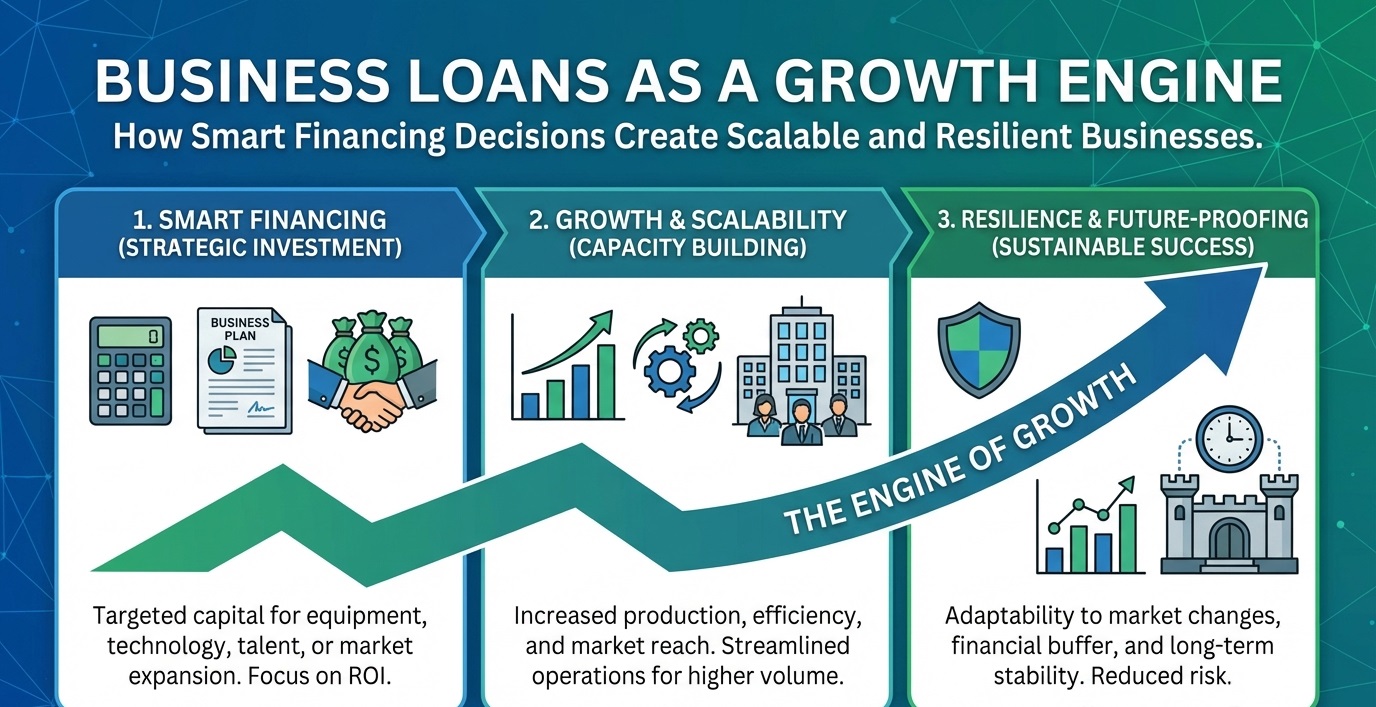
In today’s fast-moving business environment, growth is no longer optional—it is essential for survival. Rising competition, changing customer expectations, and increasing operational costs make it difficult for businesses to rely only on internal savings. This is where business loans emerge as a powerful growth engine. When planned carefully, business loans help companies scale operations, improve cash flow, and build financial resilience. However, poor borrowing decisions can lead to financial stress and long-term risk. Understanding how to use business loans strategically is the key difference between profitable growth and debt burden.
This article explores how business loans support scalability, improve financial stability, and help entrepreneurs build strong, future-ready businesses.
Why Business Growth Depends on Access to Capital
Every business—whether small, medium, or large—faces moments when opportunities arise faster than cash reserves grow. Expansion plans, bulk inventory purchases, technology upgrades, or market entry strategies all require capital at the right time.
Common Growth Challenges Businesses Face
-
Limited cash flow during expansion
-
Rising raw material and operating costs
-
Delayed payments from customers
-
Need for marketing and brand visibility
-
Technology and digital infrastructure investments
-
Seasonal demand fluctuations
Without timely funding, even profitable businesses may struggle to grow. Business loans bridge this gap by providing immediate liquidity.
Understanding Business Loans Beyond Just Borrowing
A business loan is more than borrowed money—it is a financial tool designed to improve business performance. Unlike personal loans, business loans are structured around revenue cycles, operational needs, and long-term goals.
Key characteristics of business loans include:
-
Flexible loan amounts based on business size
-
Fixed or floating interest rates
-
Short-term and long-term repayment options
-
Secured and unsecured formats
When aligned with business objectives, loans convert financial pressure into growth momentum.
Types of Business Loans That Enable Scalable Growth
Choosing the right loan type is essential for sustainable growth and profitability.
1. Expansion and Term Loans
Term loans are long-duration loans repaid over fixed EMIs.
Best used for:
-
Opening new branches or offices
-
Factory or warehouse expansion
-
Purchasing production equipment
These loans support asset creation and long-term revenue growth.
2. Working Capital Loans for Operational Efficiency
Working capital loans help businesses manage daily expenses without interruption.
Best used for:
-
Inventory purchases
-
Salary and rent payments
-
Vendor and supplier payments
Strong working capital management improves business stability and creditworthiness.
3. Unsecured Business Loans for Quick Opportunities
Unsecured loans do not require collateral and are approved faster.
Best used for:
-
Marketing and advertising campaigns
-
Short-term business opportunities
-
Emergency financial needs
Though interest rates may be higher, speed and flexibility often justify the cost.
4. Secured Business Loans for Cost Efficiency
These loans require collateral such as property or equipment.
Best used for:
-
Large funding requirements
-
Long-term investments
-
Debt restructuring
Lower interest rates make secured loans ideal for cost-conscious growth.
5. MSME and Government-Supported Loans
Many governments offer financial support to small and medium businesses.
Best used for:
-
Small business expansion
-
Manufacturing and service enterprises
-
Startups with limited credit history
These loans reduce funding costs and improve approval chances.
Eligibility Factors That Influence Loan Approval
Lenders assess business loans based on financial stability and risk profile.
Key Eligibility Parameters
-
Business vintage and operational history
-
Annual turnover and profitability
-
Personal and business credit score
-
Cash flow consistency
-
Existing liabilities
A strong financial profile results in faster approvals and better loan terms.
Documents Required for Business Loan Approval
Accurate documentation reflects transparency and professionalism.
Commonly required documents include:
-
Business registration proof
-
Identity and address proof of owners
-
Bank statements (6–12 months)
-
Income tax returns
-
Profit and loss statements
-
Balance sheet
-
GST registration (if applicable)
Well-maintained records improve lender confidence.
How Interest Rates Affect Business Profitability
Interest rates directly influence total borrowing cost and net profit.
Factors Affecting Business Loan Interest Rates
-
Credit score and repayment history
-
Loan type (secured or unsecured)
-
Loan amount and tenure
-
Industry risk profile
Lower interest rates free up cash flow for reinvestment and growth.
Benefits of Business Loans for Long-Term Success
1. Faster Scaling Opportunities
Loans allow businesses to act quickly on growth opportunities.
2. Improved Cash Flow Management
Steady funding prevents operational disruptions caused by delayed payments.
3. Ownership and Control Retention
Loans do not dilute ownership, unlike equity funding.
4. Tax Efficiency
Interest paid on business loans is usually tax-deductible.
5. Strong Credit Profile Development
Timely repayment builds long-term financial credibility.
Risks Involved in Business Borrowing
Despite their benefits, business loans must be handled carefully.
-
Fixed EMI obligations
-
Higher cost of unsecured borrowing
-
Asset risk in secured loans
-
Financial stress during economic downturns
Understanding risks allows businesses to plan responsibly.
Smart Borrowing Strategies for Sustainable Growth
Borrow With a Clear Growth Plan
Loans should directly or indirectly increase revenue.
Avoid Excessive Debt
Overleveraging can strain cash flow and reduce flexibility.
Compare Loan Offers Carefully
Even small differences in interest rates affect total cost.
Maintain a Financial Cushion
Unexpected market changes should not disrupt repayments.
Review Loans Periodically
Refinancing or prepayment can reduce interest burden.
Common Business Loan Mistakes to Avoid
-
Borrowing without a defined purpose
-
Ignoring hidden charges and penalties
-
Mixing personal and business finances
-
Missing EMI payments
-
Using loan funds for non-productive expenses
Avoiding these mistakes protects profitability and credit health.
Business Loans as a Foundation for Resilient Businesses
Businesses that integrate loans into long-term planning build stronger foundations. Strategic borrowing supports innovation, market expansion, and operational efficiency while improving financial resilience.
Successful companies view loans as investment tools, not emergency solutions.
Conclusion
Business loans are one of the most powerful financial instruments for driving growth, improving cash flow, and building resilient enterprises. When used strategically, they enhance profitability, reduce financial risk, and support long-term success. By understanding loan types, eligibility criteria, interest rates, and smart borrowing strategies, entrepreneurs can make informed decisions that strengthen their businesses.
A well-planned business loan does not just fund operations—it creates opportunities, stability, and sustainable growth.
Leave a Reply